

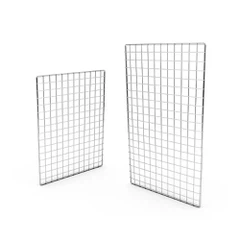
Do mesh panels block wind?
Jan 09, 2026
Leave a message
Well, let's dive right into the question that's been on a lot of folks' minds: Do mesh panels block wind? As a supplier of mesh panels, I've heard this question more times than I can count. And let me tell you, it's not as straightforward as you might think.
First off, what exactly are mesh panels? Mesh panels are basically sheets of material with a series of holes or openings. They can be made from all sorts of stuff like metal, plastic, or fiberglass. The size, shape, and spacing of those holes play a huge role in how the panels interact with the wind.
You might be thinking, "Well, if there are holes, how can it block wind?" It's a fair point. But here's the thing. Mesh panels don't completely stop the wind. Instead, they disrupt its flow. When wind hits a solid wall, it bounces off and creates turbulence. But when it hits a mesh panel, the air passes through the holes, which reduces the force of the wind.
Take a look at our Modern Double Hook. This type of mesh panel has a unique design that's really good at breaking up the wind. The double - hook structure gives it a bit more stability, and the holes are sized in a way that allows the air to flow through while still reducing the wind's impact. It's like a traffic cop for the wind, guiding it through the panel and lessening its strength.
Another factor to consider is the material of the mesh panel. Metal mesh panels, like our Steel Wire Panels, are pretty sturdy. They can withstand strong winds and are less likely to get damaged. Steel is also great because it doesn't warp or rot like some other materials. The wire construction means that there are a lot of small gaps for the wind to pass through, which helps in reducing its force.
The density of the mesh also matters. A denser mesh with smaller holes will block more wind compared to a mesh with larger holes. Our Metal Mesh Grid Panel Accessory comes in different mesh densities, so you can choose one based on your specific needs. If you're in an area with really strong winds, a denser mesh might be the way to go. But if you just want a bit of wind protection while still allowing some airflow, a less dense mesh could work.
Now, how do we measure how well a mesh panel blocks wind? There's a concept called the porosity of the mesh. Porosity is basically the percentage of the open area in the panel. A mesh with low porosity (fewer holes) will block more wind, while a high - porosity mesh will let more wind through. For example, a mesh with 20% porosity means that 20% of the panel's area is made up of holes.
But it's not just about blocking the wind. Mesh panels also have some other benefits. They can provide some privacy, which is great if you're using them for a patio or a backyard. They can also act as a barrier for insects. The holes are small enough to keep bugs out while still letting fresh air in.
In some cases, mesh panels can actually improve the overall air circulation in a space. When the wind passes through the mesh, it creates a more even distribution of air. This can be really useful in large buildings or warehouses, where proper ventilation is crucial.
Let's talk about some real - world applications. In agriculture, mesh panels are often used as windbreaks. They can protect crops from strong winds that could damage them. By reducing the wind speed, the panels help to create a more stable environment for the plants.
In construction, mesh panels are used for facades and screening. They can add an aesthetic touch to a building while also providing some wind protection. For example, a building in a windy city might use mesh panels on its exterior to reduce the wind force on the structure.


So, to answer the question "Do mesh panels block wind?" the answer is yes and no. They don't completely block the wind, but they can significantly reduce its force. The effectiveness depends on factors like the size and spacing of the holes, the material of the panel, and the density of the mesh.
If you're thinking about using mesh panels for wind protection, privacy, or any other reason, I'd be more than happy to help. As a mesh panel supplier, I've got a wide range of options to meet your specific requirements. Whether you need a small panel for your backyard or a large - scale installation for a commercial project, we've got you covered. Just reach out, and we can have a chat about what will work best for you. Let's start a conversation to find the perfect mesh panel solution for your needs.
References
- Wind Engineering and Industrial Aerodynamics, Journal of research on the interaction of structures and wind
- The Physics of Air Flow and Mesh Structures, Academic publication on air dynamic principles related to meshes
Send Inquiry