


How is perforated metal mesh made?
Jul 09, 2025
Leave a message
How is perforated metal mesh made?
As a seasoned metal mesh supplier, I'm often asked about the intricate process of manufacturing perforated metal mesh. It's a fascinating journey that combines advanced technology, skilled craftsmanship, and a deep understanding of materials. In this blog post, I'll take you through the step-by-step process of how perforated metal mesh is made, from raw materials to the finished product.
Raw Materials Selection
The first step in making perforated metal mesh is selecting the right raw materials. The most common metals used for perforated metal mesh include stainless steel, aluminum, carbon steel, and copper. Each metal has its own unique properties, such as strength, corrosion resistance, and conductivity, which make it suitable for different applications.
For example, stainless steel is a popular choice for applications that require high strength and corrosion resistance, such as in the food and beverage industry or in outdoor environments. Aluminum, on the other hand, is lightweight and has excellent conductivity, making it ideal for electrical and electronic applications. Carbon steel is strong and durable, but it is prone to rusting, so it is often coated or painted to protect it from corrosion. Copper is a highly conductive metal that is also resistant to corrosion, making it suitable for electrical and plumbing applications.
Once the raw materials have been selected, they are typically purchased in the form of coils or sheets. The thickness and size of the coils or sheets will depend on the specific requirements of the perforated metal mesh being produced.
Design and Engineering
Before the perforating process can begin, the design and engineering of the perforated metal mesh must be completed. This involves determining the pattern, hole size, and spacing of the perforations, as well as the overall dimensions and shape of the mesh.
The pattern of the perforations can vary widely, from simple round holes to more complex shapes such as squares, rectangles, diamonds, and hexagons. The hole size and spacing will depend on the specific application of the perforated metal mesh, as well as the desired strength, ventilation, and aesthetic appearance.
The design and engineering process is typically carried out using computer-aided design (CAD) software, which allows for precise and accurate planning of the perforated metal mesh. The CAD software can also be used to generate a detailed bill of materials and a manufacturing plan, which will be used to guide the production process.
Perforating Process
Once the design and engineering of the perforated metal mesh have been completed, the perforating process can begin. There are several different methods of perforating metal, each with its own advantages and disadvantages. The most common methods of perforating metal include punching, laser cutting, and chemical etching.
Punching
Punching is the most traditional method of perforating metal. It involves using a punch press to create holes in the metal sheet or coil. The punch press consists of a die, which is a tool that is used to shape the metal, and a punch, which is a tool that is used to create the holes.
The punching process begins by placing the metal sheet or coil on the die. The punch is then lowered onto the metal, creating a hole in the desired shape and size. The punching process can be repeated multiple times to create a pattern of holes in the metal.
Punching is a fast and efficient method of perforating metal, but it is limited in terms of the complexity of the patterns that can be created. It is also more suitable for thicker metals, as thinner metals may be more prone to deformation during the punching process.
Laser Cutting
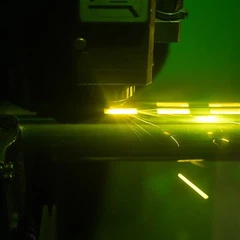
Laser cutting is a more advanced method of perforating metal that uses a high-powered laser beam to cut through the metal. The laser beam is directed at the metal sheet or coil, melting and vaporizing the metal to create a hole.
Laser cutting is a very precise and accurate method of perforating metal, allowing for the creation of complex patterns and shapes. It is also suitable for a wide range of metal thicknesses, from thin sheets to thick plates. However, laser cutting is a slower and more expensive method of perforating metal than punching, and it requires specialized equipment and trained operators.


Chemical Etching
Chemical etching is a method of perforating metal that uses a chemical solution to dissolve the metal in specific areas. The metal sheet or coil is first coated with a resist, which is a material that protects the metal from the chemical solution. The resist is then removed in the areas where the holes are to be created, exposing the metal to the chemical solution.
The chemical solution then dissolves the exposed metal, creating a hole in the desired shape and size. The chemical etching process can be repeated multiple times to create a pattern of holes in the metal.
Chemical etching is a very precise and accurate method of perforating metal, allowing for the creation of complex patterns and shapes. It is also suitable for a wide range of metal thicknesses, from thin sheets to thick plates. However, chemical etching is a slower and more expensive method of perforating metal than punching, and it requires specialized equipment and trained operators.
Finishing Process
Once the perforating process has been completed, the perforated metal mesh may undergo a finishing process to improve its appearance, durability, and performance. The most common finishing processes for perforated metal mesh include deburring, cleaning, and coating.
Deburring
Deburring is the process of removing any sharp edges or burrs from the perforated metal mesh. This is typically done using a deburring machine, which uses a rotating brush or abrasive wheel to remove the burrs.
Deburring is an important step in the finishing process, as it helps to prevent injuries to workers and damage to the equipment during handling and installation. It also improves the appearance of the perforated metal mesh, making it more aesthetically pleasing.
Cleaning
Cleaning is the process of removing any dirt, oil, or other contaminants from the perforated metal mesh. This is typically done using a cleaning solution and a brush or spray gun.
Cleaning is an important step in the finishing process, as it helps to improve the adhesion of the coating and prevent corrosion. It also improves the appearance of the perforated metal mesh, making it more aesthetically pleasing.
Coating
Coating is the process of applying a protective layer to the perforated metal mesh to improve its durability and performance. The most common types of coatings for perforated metal mesh include powder coating, galvanizing, and painting.
Powder coating is a process of applying a dry powder to the perforated metal mesh and then heating it to melt the powder and form a protective layer. Powder coating is a durable and long-lasting coating that is resistant to corrosion, abrasion, and UV rays.
Galvanizing is a process of applying a layer of zinc to the perforated metal mesh to protect it from corrosion. Galvanizing is a popular coating for outdoor applications, as it provides excellent protection against rust and corrosion.
Painting is a process of applying a liquid paint to the perforated metal mesh to improve its appearance and protect it from corrosion. Painting is a less durable coating than powder coating or galvanizing, but it is more flexible and can be used to achieve a wider range of colors and finishes.
Quality Control
Once the finishing process has been completed, the perforated metal mesh undergoes a rigorous quality control process to ensure that it meets the required specifications and standards. The quality control process typically includes visual inspection, dimensional inspection, and performance testing.
Visual Inspection
Visual inspection is the process of examining the perforated metal mesh for any defects or imperfections, such as scratches, dents, or uneven holes. The visual inspection is typically carried out using a magnifying glass or a microscope to ensure that the perforated metal mesh meets the required quality standards.
Dimensional Inspection
Dimensional inspection is the process of measuring the perforated metal mesh to ensure that it meets the required dimensions and tolerances. The dimensional inspection is typically carried out using a caliper or a micrometer to measure the thickness, width, length, and hole size of the perforated metal mesh.
Performance Testing
Performance testing is the process of testing the perforated metal mesh to ensure that it meets the required performance standards. The performance testing typically includes testing the strength, corrosion resistance, and ventilation of the perforated metal mesh.
Packaging and Shipping
Once the perforated metal mesh has passed the quality control process, it is ready to be packaged and shipped to the customer. The perforated metal mesh is typically packaged in a protective material, such as cardboard or plastic, to prevent damage during transportation.
The packaging and shipping process is an important step in ensuring that the perforated metal mesh arrives at the customer's location in good condition. The perforated metal mesh is typically shipped using a reliable shipping carrier, such as FedEx or UPS, to ensure that it is delivered on time and in good condition.
Conclusion
In conclusion, the process of making perforated metal mesh is a complex and intricate one that requires advanced technology, skilled craftsmanship, and a deep understanding of materials. From raw materials selection to design and engineering, perforating, finishing, quality control, and packaging and shipping, every step of the process is carefully planned and executed to ensure that the perforated metal mesh meets the required specifications and standards.
As a metal mesh supplier, we are committed to providing our customers with high-quality perforated metal mesh that meets their specific needs and requirements. Whether you are looking for a simple round hole pattern or a more complex shape, we have the expertise and experience to produce the perfect perforated metal mesh for your application.
If you are interested in learning more about our perforated metal mesh products or would like to discuss your specific needs and requirements, please contact us today. We would be happy to provide you with a free quote and answer any questions you may have.
References
- ASM International. (2008). Metals Handbook: Desk Edition. ASM International.
- Callister, W. D., & Rethwisch, D. G. (2014). Materials Science and Engineering: An Introduction. Wiley.
- Degarmo, E. P., Black, J. T., & Kohser, R. A. (2003). Materials and Processes in Manufacturing. Wiley.
Send Inquiry