


What is the maximum span for a hang rail for clothes without support?
Jul 23, 2025
Leave a message
Hey there! I'm a supplier of hang rails for clothes, and I often get asked about the maximum span for a hang rail without support. It's a crucial question, especially for those looking to set up efficient and cost - effective clothing storage solutions. So, let's dig into it!

Understanding the Basics
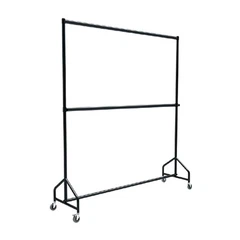
First off, what do we mean by the "span" of a hang rail? Simply put, it's the distance between the two points where the rail is supported. For instance, if you've got a rail attached to two Steel Upright Post, the span is the space between those uprights.
When we talk about a hang rail without support, we're considering how far the rail can stretch on its own before it starts to sag or break under the weight of the clothes. This is super important because sagging not only looks bad but can also cause clothes to bunch up and make it harder to access them.
Factors Affecting the Maximum Span
There are several factors that influence how far a hang rail can go without support.
Material of the Rail
The material of the hang rail plays a huge role. Different materials have different strengths and flexibilities.
- Aluminum Rails: Aluminum is lightweight and corrosion - resistant, which makes it a popular choice. However, it's not as strong as some other materials. Generally, an aluminum hang rail can have a maximum span of around 3 to 4 feet without support. This is because aluminum has a relatively low modulus of elasticity, meaning it will start to bend more easily under load.
- Steel Rails: Steel is much stronger than aluminum. A well - made steel hang rail can handle a much larger span. Depending on the gauge (thickness) of the steel, a steel rail can have a maximum span of 6 to 8 feet without support. Thicker steel rails are even better at resisting sagging because they have a higher strength - to - weight ratio.
- Wooden Rails: Wood can also be used for hang rails. Solid wood, like oak or maple, can be quite strong. But it's also susceptible to changes in humidity and temperature, which can cause it to warp. A wooden hang rail might have a maximum span of 4 to 6 feet without support, depending on the quality of the wood and how it's treated.
Thickness and Design of the Rail
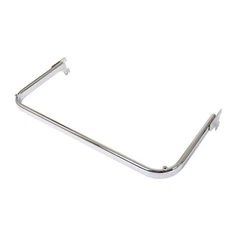
The thickness of the rail matters a lot. A thicker rail will be stronger and able to support more weight over a longer span. Also, the design of the rail can affect its strength. For example, a Hangrail with a reinforced or contoured shape can be stronger than a simple flat - bar rail. Rails with a U - shaped or channel design are often more rigid and can support a greater span without support.
Weight of the Clothes
The type and amount of clothes you plan to hang on the rail are important considerations. Heavy winter coats, for example, will put more stress on the rail than lightweight summer dresses. If you're hanging heavy items, you'll need to reduce the span of the rail to prevent sagging. As a general rule, if you're hanging mostly heavy clothes, you should aim for a shorter span, even if the rail material is strong.
Calculating the Maximum Span
While there are general guidelines for the maximum span of different types of hang rails, it's not always a one - size - fits - all situation. In some cases, you might need to do some calculations to figure out the exact maximum span for your specific needs.
Engineers use formulas based on the material properties, the shape of the rail, and the expected load. These formulas take into account things like the modulus of elasticity of the material, the moment of inertia of the rail's cross - section, and the distributed load (weight of the clothes per unit length).
For most DIYers or small - scale users, though, you can usually rely on the manufacturer's recommendations. Most hang rail suppliers, like us, will provide information on the maximum span for their products based on standard loads.
Real - World Examples
Let's look at a couple of real - world scenarios to see how the maximum span works in practice.
Home Closet
In a typical home closet, you might want to use a hang rail to organize your clothes. If you're using an aluminum hang rail and you're mostly hanging lightweight shirts and pants, you can probably get away with a span of 3 to 4 feet without support. This will keep the rail straight and prevent your clothes from sagging.
If you have a larger closet and want to use a steel rail, you could have a span of 6 to 8 feet without support. This would give you more space to hang your clothes without having to install too many supports.
Retail Store
In a retail store, where there are often a large number of heavy coats and suits hanging on the rails, the maximum span will be shorter. A steel rail might have a span of 5 to 6 feet without support to ensure that the rail can handle the heavy load and maintain its shape.
Importance of Choosing the Right Span
Choosing the right maximum span for your hang rail is crucial. If you go beyond the recommended span, the rail will sag over time. This can lead to a number of problems.
- Aesthetics: Sagging rails look unprofessional and messy. In a retail setting, it can give a bad impression to customers. In a home closet, it can make your clothes look disorganized.
- Functionality: Sagging rails make it difficult to slide clothes along the rail. Clothes can get stuck in the sagging areas, and it becomes harder to access the items at the back of the rail.
- Durability: A rail that is over - spanned will be under more stress, which can cause it to break or fail prematurely. This means you'll have to replace the rail sooner, which can be costly.
Our Products and Solutions
As a hang rail for clothes supplier, we offer a wide range of products to meet different needs. Our Waterfall Faceout hang rails are designed with both style and functionality in mind. They are made from high - quality materials and come in different thicknesses and designs to ensure that you can find the right rail for your specific situation.
We also provide detailed information on the maximum span for each of our products. Our team of experts can help you choose the best rail and determine the appropriate span based on your needs. Whether you're setting up a small home closet or a large retail store, we've got you covered.
Contact Us for Procurement
If you're interested in purchasing our hang rails for clothes, we'd love to hear from you. We can discuss your requirements in detail and help you find the perfect solution for your clothing storage needs. Whether you have questions about the maximum span, the material, or the design of the rail, our team is here to assist you. Don't hesitate to reach out and start a conversation about your procurement.
References
- "Materials Science and Engineering: An Introduction" by William D. Callister Jr. and David G. Rethwisch
- "Mechanics of Materials" by Ferdinand P. Beer, E. Russell Johnston Jr., John T. DeWolf, and David F. Mazurek
Send Inquiry