


Metal Art Welding
Jul 13, 2024
Leave a message
Art creation and craftsmanship methods are always inseparable. As an industrial technology, the emergence of welding caters to the need for new technological means in the development of metal art.
Metal welding art can be separated from traditional metal art in a branching manner as a relatively independent art form, because:
Firstly, welding has artistic qualities.
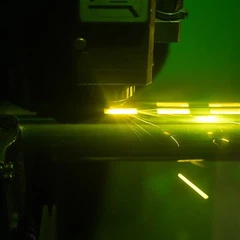
Welding can generate rich artistic expression language. Welding is usually carried out at high temperatures, and metals undergo many wonderful and rich changes at high temperatures: the metal base material undergoes color changes and thermal deformation (i.e. welding heat affected zone); After the welding wire melts, it will form some beautiful textures; And welding defects are often applied in welding art. Welding defects refer to the defects that occur in the welding joint during the welding process and do not meet the design or process requirements. Its main manifestations include welding cracks, pores, undercutting, incomplete penetration, incomplete fusion, slag inclusion, weld bead, collapse, pits, burn through, inclusions, etc.
Secondly, the language of welding art is unique.
The various forms of welding defects and welding heat affected zones mentioned above are formed through welding operations under certain specifications, and only through welding can these artistic languages be produced. The surface effect of welding art works is something that other metal processing techniques cannot or are difficult to achieve, so welding art has a unique artistic quality.
By using different metal materials and welding techniques, the artistic value of welding can be fully demonstrated in various forms of metal art
1. Metal welding sculpture
In welding sculptures, welds and cuts are not passively present as traces of technical processing, but are actively expressed in a wonderful and indispensable language of expression. A welded sculpture, with coarse welds exposed on the surface of the sculpture, and various irregular cutting marks have become the artist's beautiful artistic language
2. Metal welding wall decoration
If a wall decoration work is regarded as a painting, the processing of points, lines, surfaces, black, white, gray, and even colors in the picture can be achieved through welding. Various types and materials of metal wires, using different welding processes, will appear in different forms on the screen.
The work adopts the method of manual plasma cutting, which uses the heat generated by the current during cutting to create a heat affected zone at the cutting edge, thus "dyeing" the bright white stainless steel with a slightly gradient color. At the same time, by adjusting the welding specifications, the strong airflow sprayed by the cutting gun will "blow" a randomly formed texture around the cutting edge at the moment when the steel plate melts. After the metal cools down after cutting, it solidifies into a beautiful cut mark, which contrasts with the texture of the flat and shiny stainless steel plate in the middle. The formation process of this random effect has a certain degree of randomness, but it is also a phenomenon that must occur under certain welding specifications.
From a size perspective, larger welding art wall decorations can be welded using semi-automatic CO2 gas shielded welding, while smaller ones can be welded using manual tungsten inert gas welding.
Send Inquiry